
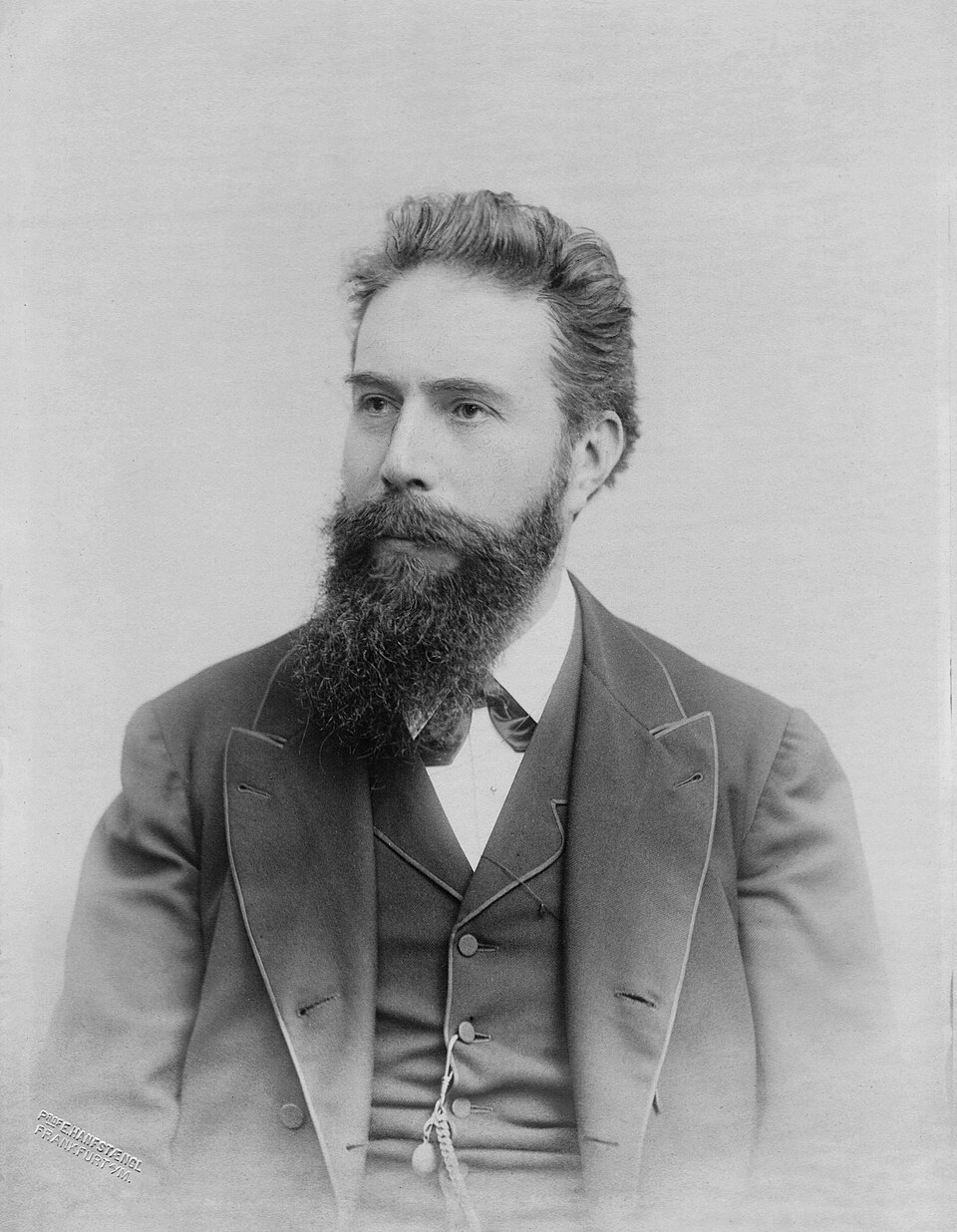
Röntgen was working with a cathode ray tube wrapped in black cardboard when a fluorescent screen across the room began to glow. He spent the next weeks testing the unknown rays, which he called X-rays, and found that they passed through paper, wood and flesh but not bone or metal.
In December he made an image of the bones in his wife Anna Bertha's hand. Within months doctors were using X-rays to find broken bones and bullets, and in 1901 Röntgen received the first Nobel Prize in Physics.
Source: Wikipedia